Custom baby knitwear manufacturer

Baby Knitwear

Build a focused 0–3 baby range, extend selected styles into older sizes, or coordinate a parent-child capsule. The size architecture follows the program.

Primary range: 0–3 yearsSelected older sizesGOTS organic cotton optionParent-child programs
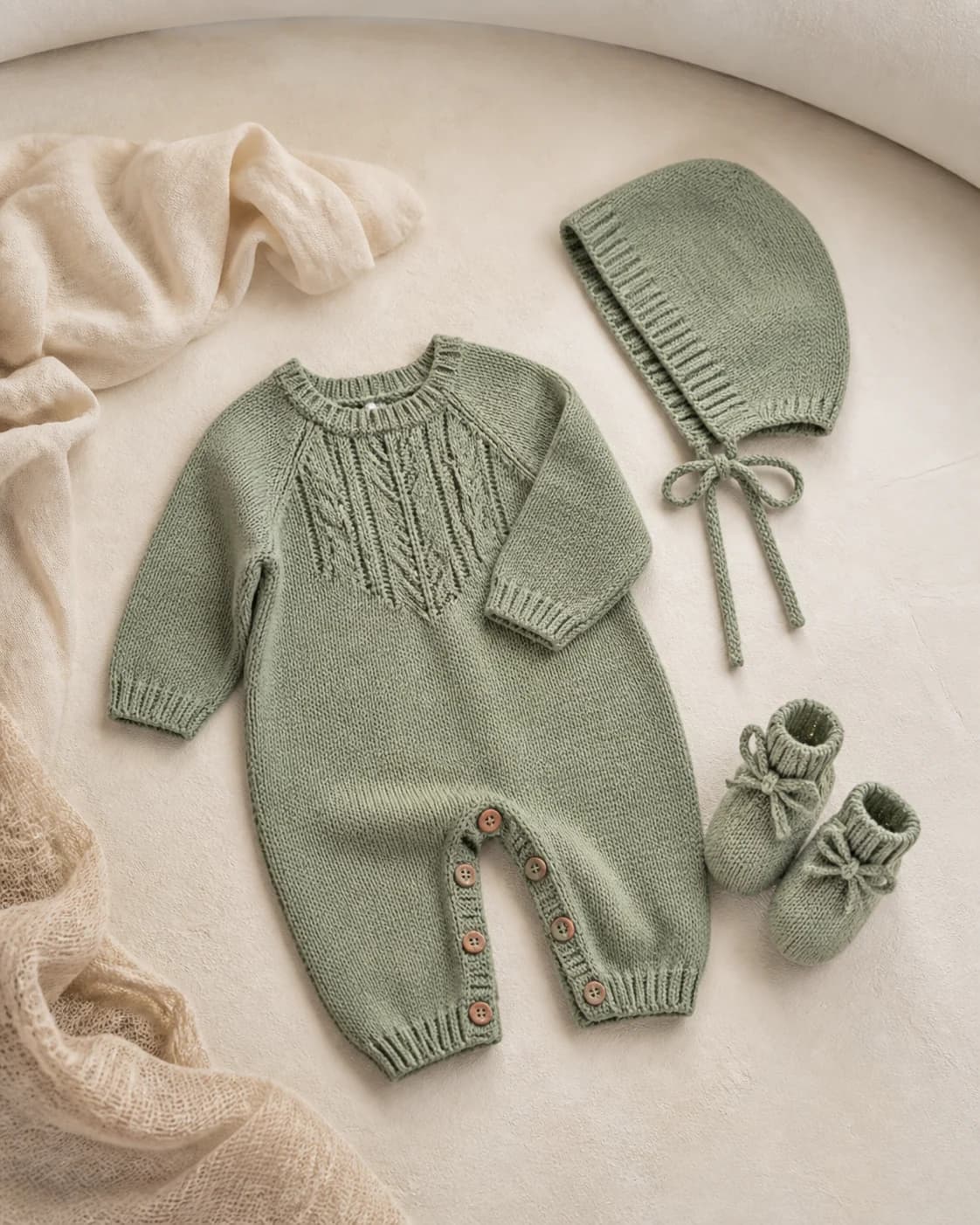
Sage knitted baby romper, bonnet and booties arranged as a coordinated set
Baby coreRompers, beanies & booties
Primary age range0–3 years
ExtensionOlder sizes & parent-child
Certified optionGOTS organic cotton

Product facts

The details buyers need before sampling.

Use this short brief to check product fit, commercial responsibilities and the information needed for a useful first conversation.

Product scope
Private-label baby knitwear range
Material route
Cotton or GOTS-certified organic cotton, confirmed by selected style and construction
Typical buyer
Baby brands, boutique retailers and parent-child collection teams
Customization scope
Styles, size architecture, colors, knit details, labels, logo and packaging
Quantity policy
No single public MOQ; quantity is assessed against the selected styles, sizes, color variants and packaging.
Sampling policy
Sampling timing is quoted after the assortment, size plan, material route and packaging scope are confirmed.
Manufacturing model
OEM, ODM and private-label development; the final production route is confirmed by the knitwear program.
Evidence scope
Material and product documentation is matched to the selected style, construction and destination market.

Choose the program scale

Start with the range you need to sell.

Choose a focused baby range, selected older sizes or a coordinated family capsule.

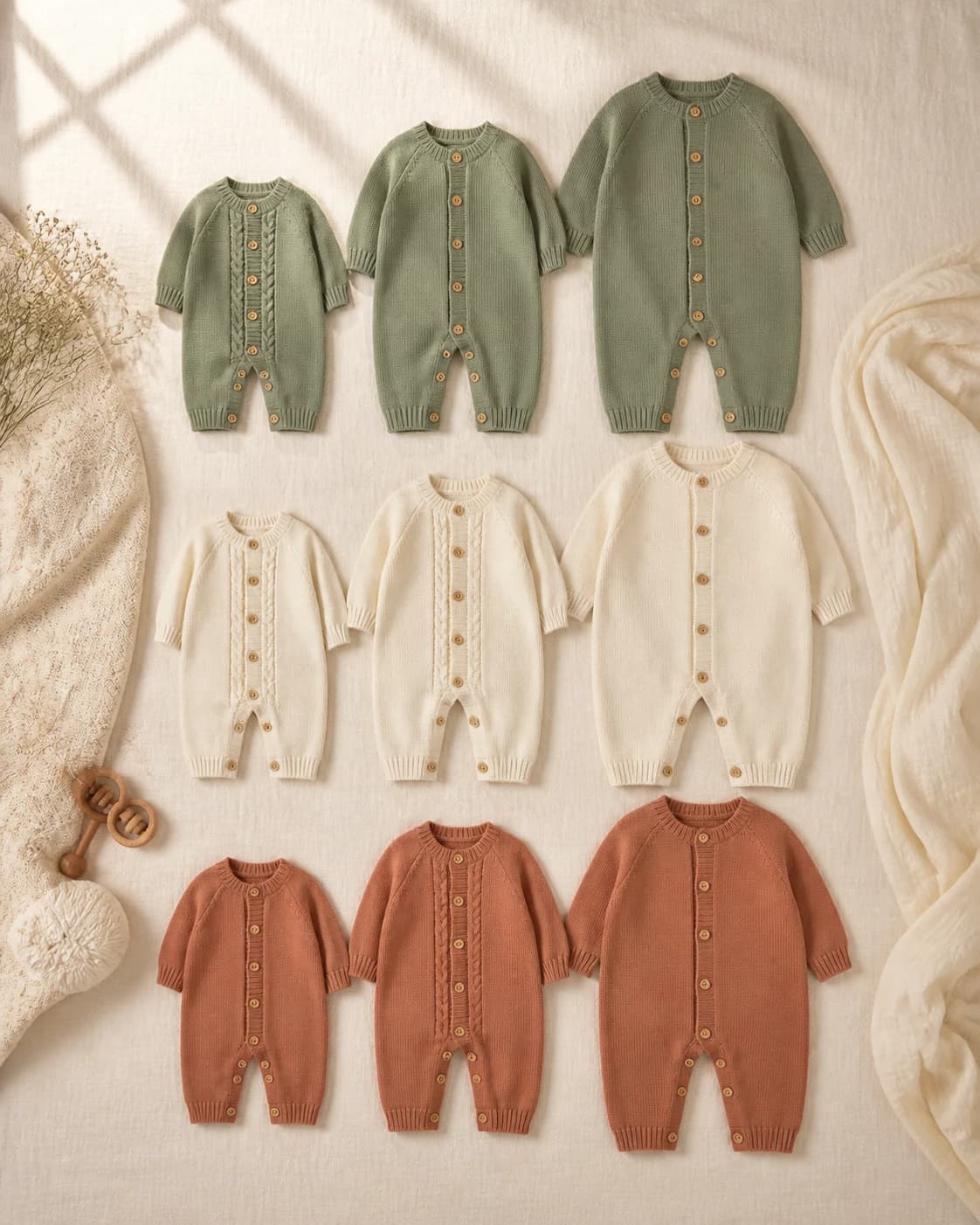
Coordinated baby knitted romper range in sage, ivory and clay with multiple constructions and sizes
Core 0–3 program

Romper-led range

  • Babywear programs commonly center on ages 0–3
  • Mixed colors and sizes can be planned
  • Measurements confirmed for each style
Discuss this route
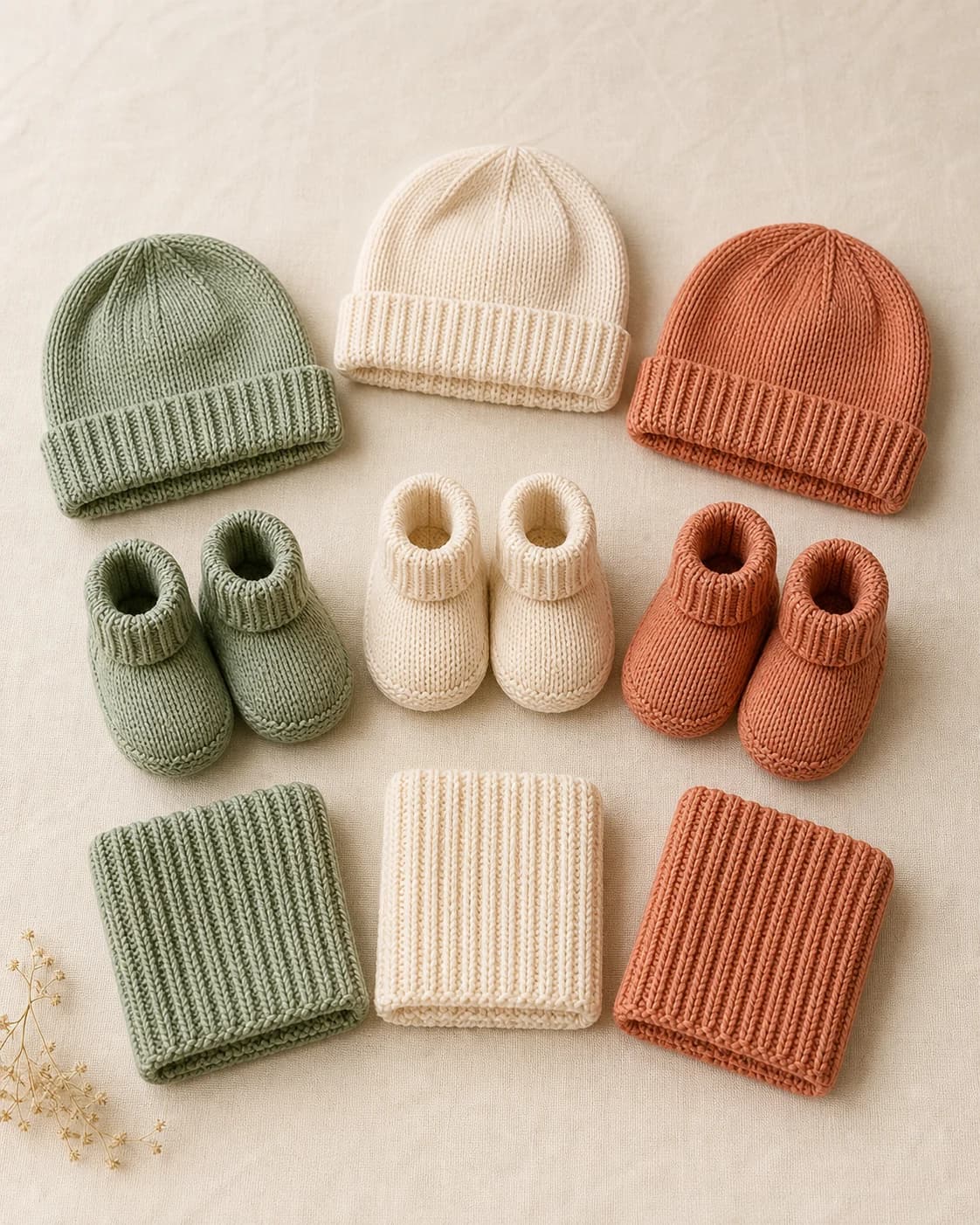
Coordinated knitted beanies and booties in sage, ivory and clay with knit swatches
Coordinated add-ons

Accessory family

  • Coordinate as pairs or separate pieces
  • Carry color across the core range
  • Useful for standalone or gift-set programs
Discuss this route
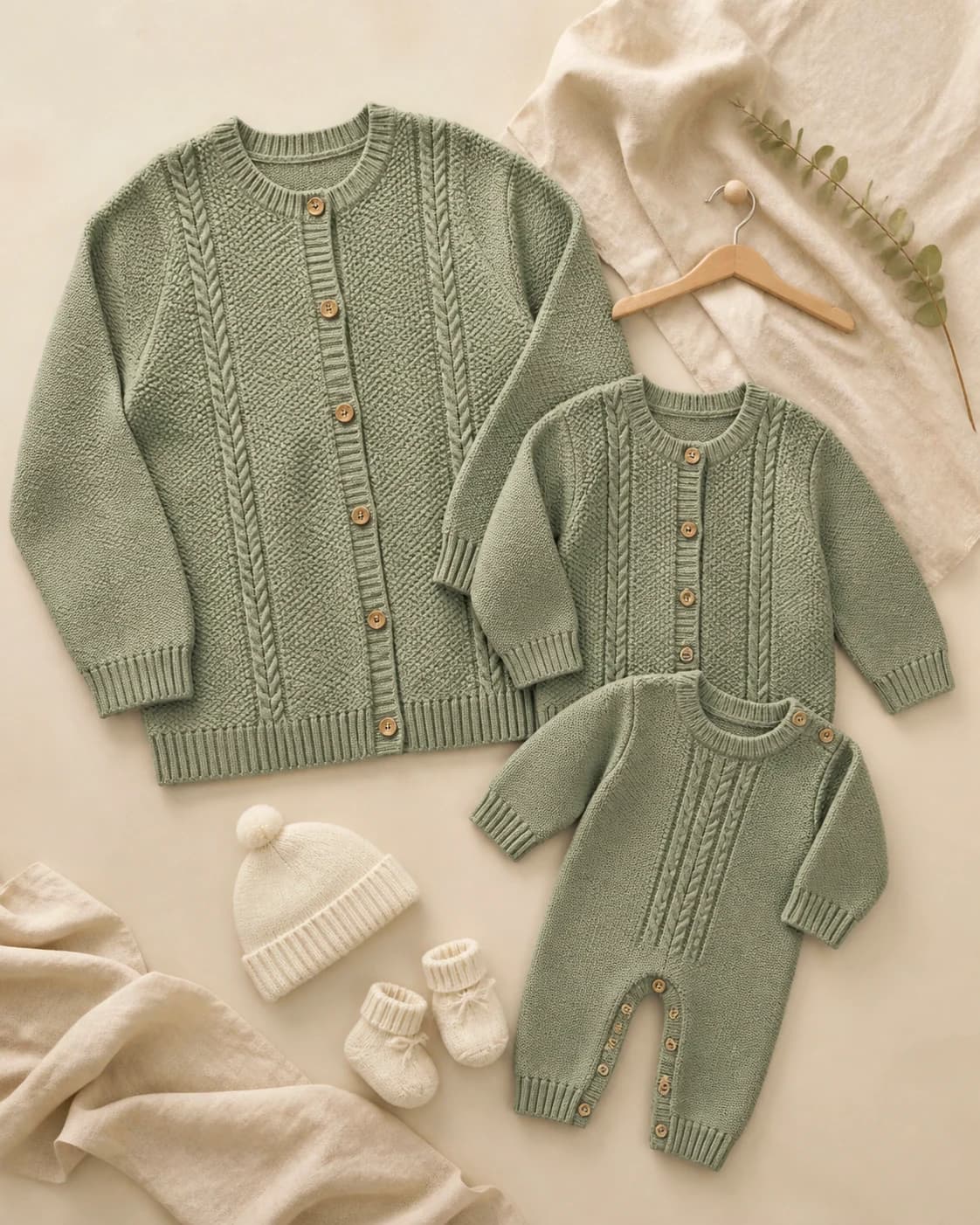
Matching adult cardigan, child cardigan and baby romper showing a parent-child knitwear size progression
Extended-size route

Parent-child capsule

  • Adult, child and baby scope defined together
  • Construction coordinated by the project
  • Size and fit specified for each style
Discuss this route

Assortment planning

Plan styles, colors and sizes together.

Map styles, colors and sizes before final quantities.

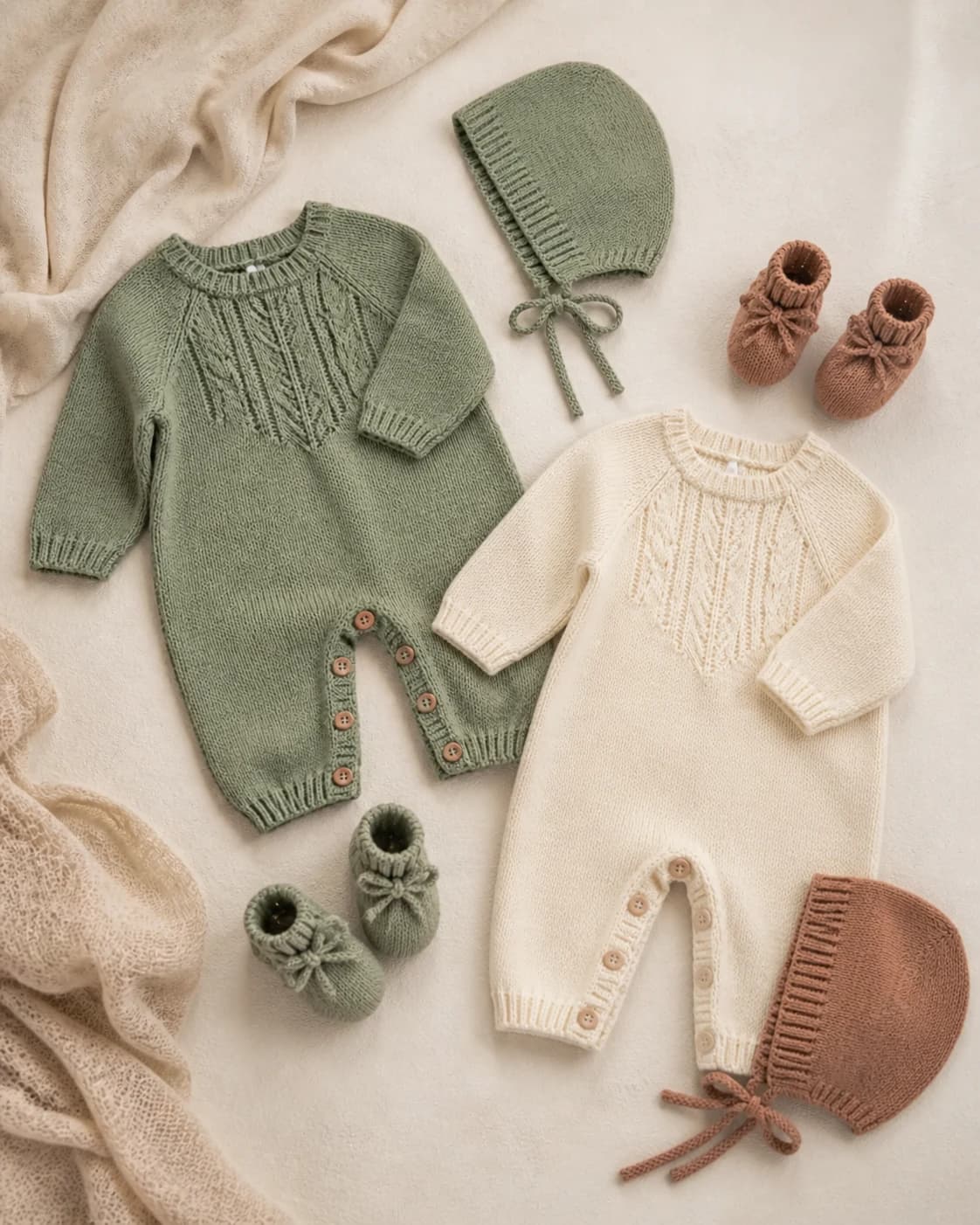
Baby knitwear assortment showing sage, ivory and clay rompers, beanies and booties

Create the assortment before multiplying it.

Start with one lead style and add only the variants that serve the customer and channel.

  1. Style
    Choose the product roles

    Define the lead romper and any beanie, bootie or extended-size support.

  2. Color
    Give each shade a purpose

    Assign colors by style instead of applying every shade to every product.

  3. Size
    Build the curve by style

    Confirm measurements and age scope for every selected piece.

  4. Finish
    Connect the brand system

    Align labels, hangtags, folding and standalone or gift-set packaging.

01 / Styles2 selected styles
02 / Colors3 colors each
03 / Sizes4 sizes each
Illustrative outcome24 planned variants

Illustrative assortment only—not a stock, MOQ or availability commitment. The final matrix is built from the selected styles and market brief.

Range development

Turn the selected range into approved products.

Move through four outputs: scope, variant map, style specifications and final approval.

  1. Baby knitwear program assortment

    01Define the program

    Choose a baby core, accessory family, older-size extension or parent-child scope.

  2. Knitted romper color and size range

    02Map the variants

    Assign styles, colors and sizes before confirming the overall assortment and quantity.

  3. Knitted baby accessory development

    03Develop by style

    Resolve material, construction, measurements, labels and presentation for each piece.

  4. Coordinated approved baby knitwear range

    04Review together

    Check fit, color relationships and presentation across the complete selected range.

Buyer questions

Practical answers for range planning.

Confirm material, measurements, variants and quantity for the chosen program.

01Which size ranges can be developed?

Most programs focus on ages 0–3, with selected styles also available for older children or coordinated parent-child capsules.

02Which baby knitwear styles are confirmed?

Confirmed baby directions include rompers, beanies and booties. The selected styles, age scope and size curve are defined for the project.

03Can you develop matching parent-child knitwear?

Yes. Parent-child pieces and older-size extensions can be scoped when styles, measurements, materials and color direction are defined for the program.

04Can colors and sizes be mixed?

Yes. Mixed colors and sizes are supported. The final combination is mapped across styles and reviewed as one assortment so the total variant count remains intentional.

05Is GOTS-certified organic cotton available for knitwear?

Yes. Baby and parent-child knitwear can be developed with a GOTS-certified organic cotton option. Yarn, construction, measurements and certificate scope are confirmed for each selected style.

06Can knitwear be developed for a newborn gift set?

Yes. A romper, beanie or pair of booties can form the wearable layer of a coordinated gift set with muslin, a knitted blanket or a crochet piece.

Built around your brief

Build a knitwear range that works across style, color and size.

Share the intended customer, lead styles, age or parent-child scope and target market. The size architecture and certified-material route can be developed from there.

Plan the knitwear range
Start a project